Submitted by Jannet Park, LS Math Specialist
The Jackson 5 famously sang, "ABC, easy as 1-2-3." But is counting easy? Anyone who has watched a young child learn to count knows it takes real work.
We often assume counting is a simple skill, so we stop teaching it early. Think about how often we counted aloud with toddlers and preschoolers, reciting numbers as we climbed stairs or shared snacks. Around age five, we tend to practice this skill less. We push children past rote counting and expect them to give up their fingers, even though fingers are a powerful problem-solving tool. They support success and build a bridge to abstract thinking, so there's no need to rush children away from them. Teaching counting is about more than memorizing the order of numbers. It's about helping children understand what numbers mean.
Counting lays the foundation for the four basic operations: addition, subtraction, multiplication, and division. Through counting, children learn to identify numbers, understand their values, and see how they relate to one another.
We also need to help children trust their count: is the last number they say the total amount? Once that idea is secure, counting in units becomes far more efficient than counting by ones. Saying "1 ten, 2 tens, 3 tens = 30," or "29 tens = 290," or "3 thousands = 3,000" builds place-value understanding. When students trust that a group of ten really is ten, they can count in larger units and begin to internalize how our number system works.
So keep counting with younger students, and let’s try not to nudge them away from their fingers too quickly. With older students, keep counting alive by asking: What is 1 more or 1 less than this number? What is 10 more or 10 less? Too often we stop having these conversations, and then students struggle with questions like "What is 1 more than 69?", "What is 10 more than 790?", or "What is 1 more than 199,999?" These struggles point to weak number sense, which can often be traced back to weak counting skills. Counting isn't a skill we outgrow. It's the foundation everything else is built on, so keep counting at every grade.
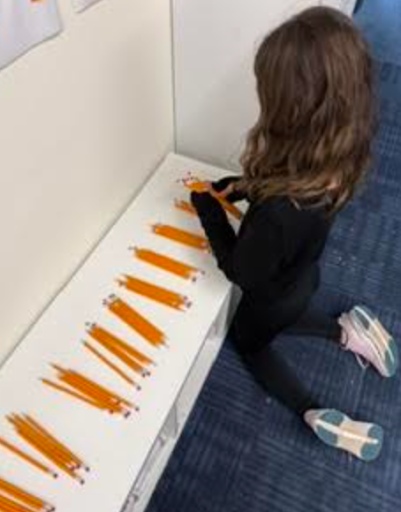
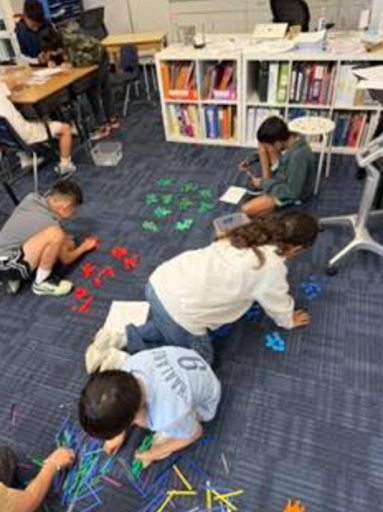
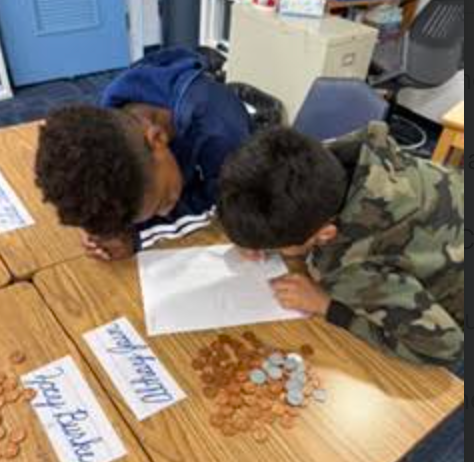
** Photos of third graders counting large collections of items by different units